Executive Summary
We still classify machine learning systems by how they are trained.
Supervised.
Unsupervised.
Reinforcement learning.
That taxonomy made sense when models were static.
Agentic systems are not.
They must be classified by how they behave, not how they were trained.
The Real Failure Mode: Training-Centric Thinking
The classic machine learning taxonomy was built for a different era.
Models were trained offline, deployed once, and evaluated by accuracy. Knowing whether a system was supervised or unsupervised told you something useful about how it would behave.
That assumption no longer holds.
Modern systems learn continuously, act in environments, and update themselves based on feedback that arrives late, partially, or not at all.
Training tells you how a system learned. It tells you almost nothing about how it will behave.
The Blind Spot: Learning Is Not Agency
A supervised model can trigger actions.
A reinforcement learner can behave myopically.
An unsupervised system can shape downstream decisions.
Learning type does not determine agency.
Agency emerges when a system:
- forms internal beliefs
- acts on the world
- observes consequences
- updates future behavior
None of that is captured by the old taxonomy.
The Architectural Truth: Feedback and Control Matter More Than Labels
To understand modern systems, we need a taxonomy that reflects:
- where feedback comes from
- when it arrives
- how it influences future action
That is an architectural concern, not a statistical one.
A More Useful Taxonomy
Predictive Systems
Learn from historical data and produce outputs.
They do not observe the consequences of their predictions.
Most supervised models live here.
Reactive Systems
Respond to inputs with actions.
They do not reason over time or maintain belief.
Many control systems and heuristics fall into this category.
Adaptive Systems
Act, observe outcomes, and update behavior.
Feedback loops exist, but reasoning is limited.
Many reinforcement learning systems stop here.
Agentic Systems
Maintain internal beliefs.
Plan actions.
Reflect on outcomes.
Adjust future behavior deliberately.
They orchestrate multiple learning modes inside a single loop.
Where Traditional ML Fits
The old taxonomy still has value — just not as a behavioral classifier.
- Supervised learning builds predictors
- Unsupervised learning builds representations
- Reinforcement learning provides feedback signals
- Self-supervision builds memory
Agentic systems combine all of these.
They are not a new learning type.
They are a new system shape.
The Agentic Perspective
Agentic systems are not defined by how they are trained.
They are defined by how they:
- form beliefs
- act under uncertainty
- incorporate delayed feedback
- manage confidence and risk
This is why the old taxonomy collapses in production.
Agentic behavior emerges from architecture, not algorithms.
Agentic systems don’t emerge from a single learning paradigm.
They are shaped by isolation, constraint, compression, and uncertainty.
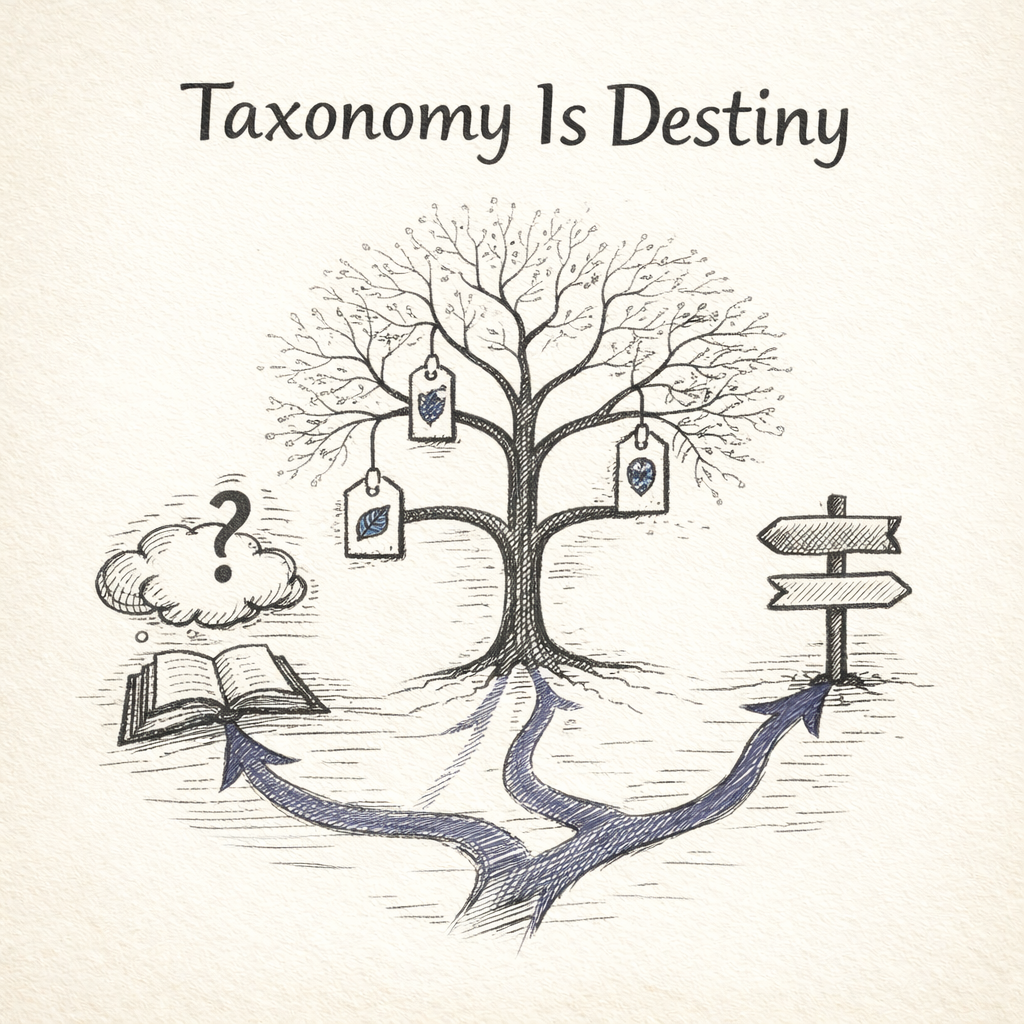
Closing: Taxonomy Is Destiny
The way we classify systems shapes how we design them.
If we classify by training method, we optimize models.
If we classify by behavior, we design systems.
Agentic AI demands the second.