Featured framework
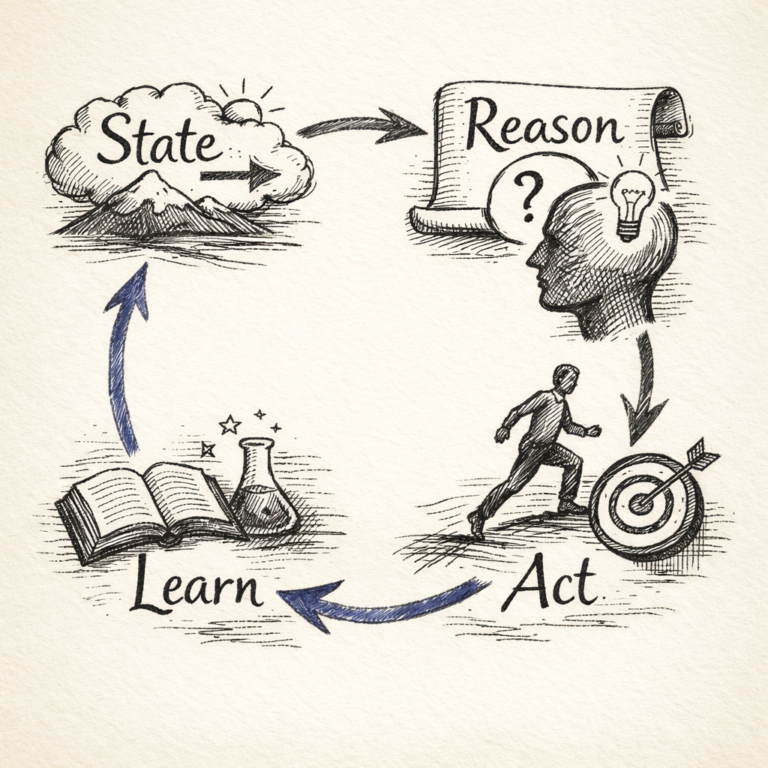
SRAL: A Framework for Evaluating Agentic AI Architectures
State, Reason, Act, Learn: a four-part lens for evaluating whether an agent's architecture survives production, not just the demo.
Read the frameworkFormer Global Head of Professional Services, then VP of Services and Solution Architecture, Lightbend (Akka) 13 years in distributed systems creator of the SRAL framework
I design and evaluate agentic systems where architecture, not the model, decides what survives production.
Currently building an infrastructure company for agentic commerce. I write about AI systems that think, act, and recover under pressure, and the engineering patterns that make them work at scale.
10 years105 essays1 frameworkDOI'dopen-source
State, Reason, Act, Learn: a four-part lens for evaluating whether an agent's architecture survives production, not just the demo.
Read the frameworkThe framework I evaluate every agent with: State, Reason, Act, Learn. The mental model the rest of the blog builds on.
How AI shopping agents break the measurement commerce runs on. The problem space I'm building in.
The distributed-systems idea under most of my writing: a system's report of itself is a claim, not a measurement.
Why your AI agent keeps repeating the same mistakes. Learning is distilling what to do differently, not storing what happened.
My core thesis in full: the runtime, not the model, is the agent.
Agent cost read as a scheduling problem, admission control and backpressure, not a billing dashboard.
What "consumer behavior" even measures once an agent, not a person, makes the purchase.
The vector-database failure modes that only surface in production, and what to design for.