Repo Config Is the New Attack Surface for Coding Agents
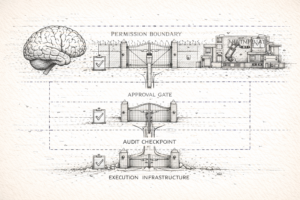
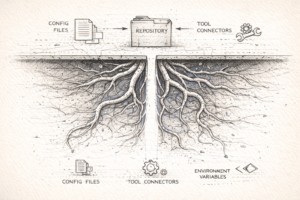
A senior engineer opens an unfamiliar repo to review a PR. The coding agent wakes up and does what it was built to do.…
Essays on agentic AI and distributed systems, and the architecture that keeps them working under pressure.
A senior engineer opens an unfamiliar repo to review a PR. The coding agent wakes up and does what it was built to do.…
Software delivery is becoming continuous inference. Agents don't just suggest code anymore. They act inside the delivery plane. And the first thing that breaks…
You added a reranker because retrieval quality was not good enough. The relevant passage kept landing at rank eight when it should have been…
You have tuned everything. A better embedding model, a reranker, hybrid search. Retrieval quality is still not what it should be, and you cannot…
Turning architectural gaps into engineering patterns The Gap Between Demo and Production Last week I evaluated LangChain's architecture using SRAL. The scorecard revealed something…
The Problem Nobody Talks About I was drowning in research papers. Not metaphorically—I had 50+ PDFs, dozens of articles, and a note-taking system that…
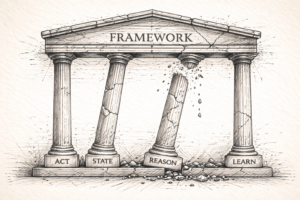
A systematic evaluation of LangChain's architectural foundations using the SRAL framework Scorecard Summary Component Score Key Finding State ⚠️ Weak-to-Moderate Memory is optional, not…
A 6.7-billion-parameter model, given a handful of tools, beat a model 26 times its size on a range of zero-shot tasks, from factual lookups…
The Problem With Agent Evaluation Most conversations about AI agents focus on capabilities. Can it browse the web? Can it write code? Can it…
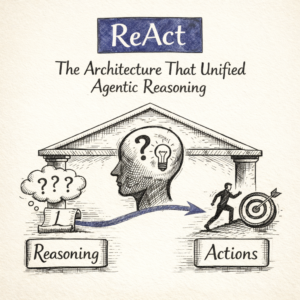
Most discussions of ReAct frame it as a clever prompting technique. It isn’t. ReAct is the first time we gave language models a structure…